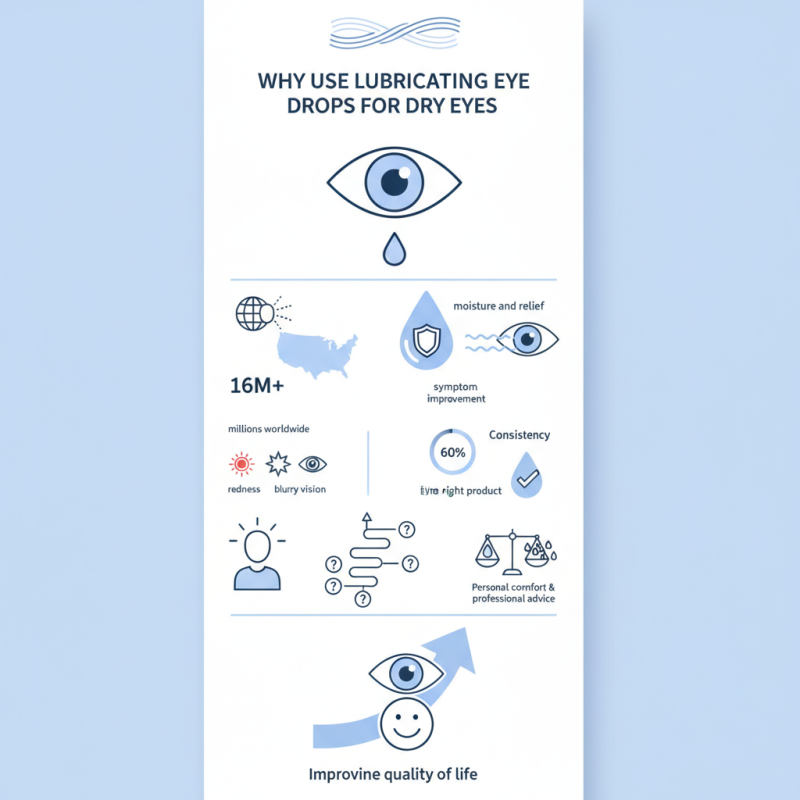
Dry eye syndrome affects millions worldwide. The American Academy of Ophthalmology estimates that over 16 million adults in the U.S. have been diagnosed with this condition. Symptoms include redness, irritation, and blurry vision. These discomforts can significantly impact daily life.
Lubricating eye drops are essential for managing dry eyes. They provide moisture and relief, creating a protective barrier on the eye surface. A recent study found that 60% of participants reported symptom improvement after using lubricating eye drops. Choosing the right product can be challenging, though. Many options exist, and not all are equally effective.
Patients often struggle to find the right balance in their treatment. Some may not use enough lubricating eye drops, while others might apply them too frequently. This inconsistency can hinder their overall effectiveness. It’s crucial to evaluate personal comfort levels and seek professional advice when necessary. Ultimately, lubricating eye drops play a vital role in improving quality of life for those suffering from dry eyes.
Understanding Dry Eyes: Causes and Symptoms
Dry eyes can lead to discomfort and frustration. Many people experience this condition. The causes are various. Environmental factors like wind, smoke, and dry air can contribute.
Prolonged screen time is another big factor. It can drain moisture and leave your eyes feeling irritated. Some individuals may even experience blurred vision. These symptoms often disrupt daily activities.
Recognizing the symptoms of dry eyes is essential. People may report a burning sensation. Redness and a gritty feeling are common as well. Tears may not provide adequate lubrication. This situation can result in increased sensitivity to light. You might also find yourself rubbing your eyes frequently, yet it rarely provides relief.
Awareness of these signs can prompt timely action. It is essential to consider lifestyle changes alongside potential treatments. Addressing underlying issues could significantly improve your quality of life. Reflecting on habits and health can lead to better management of dry eyes.
The Role of Lubricating Eye Drops in Eye Care
Lubricating eye drops play a significant role in eye care, especially for those suffering from dry eyes. These drops provide essential moisture, helping to revitalize dry, irritated eyes. They mimic natural tears, offering a soothing effect that can instantly relieve discomfort.
Patients often experience symptoms like itching, redness, and a gritty feeling in the eyes. This discomfort can hinder daily activities. Using lubricating eye drops helps to alleviate these symptoms, making it easier to focus on tasks. Many people fall into the habit of only using drops when irritation is severe. However, regular use can prevent dryness before it becomes a problem. Remember, occasional discomfort can signal a need for consistent hydration.
The texture of lubricating drops can vary, and not all drops feel the same. Some may feel heavier, while others may seem lighter. Experimenting with different formulations can help individuals find the right balance. Over time, it's important to reflect on how your eyes feel after using these drops. Do they feel truly hydrated? Or do you still need more relief? Addressing these questions is vital for effective eye care.
Usage of Lubricating Eye Drops for Dry Eyes
This chart illustrates the key factors influencing the usage of lubricating eye drops for dry eyes. The percentages represent how important each factor is for users, with effectiveness in relieving symptoms being the highest at 85%, followed by availability at 90%. Frequency of use and cost-effectiveness are also significant considerations for patients.
Types of Lubricating Eye Drops Available
Lubricating eye drops are essential for those suffering from dry eyes. They help restore moisture and relieve discomfort. Understanding the different types available can enhance treatment.
There are two main categories of lubricating eye drops: preservative-free and those containing preservatives. Preservative-free drops are ideal for sensitive eyes. They can be used frequently without irritation. In contrast, drops with preservatives often last longer but may cause sensitivity over time. A study in the "Journal of Ophthalmology" indicates that around 50% of users experience discomfort with preservative-containing products over prolonged use.
Additionally, there are gel drops designed for more severe symptoms. They offer longer-lasting relief compared to regular drops. Reports show that gel formulations can retain moisture on the eye's surface for up to eight hours. While effective, they may blur vision temporarily, which some users find inconvenient. Balancing effectiveness and comfort is key when selecting eye drops.
How to Choose the Right Lubricating Eye Drops
Choosing the right lubricating eye drops is crucial for alleviating dry eyes. A recent study found that nearly 50% of adults experience some form of dry eye. Among them, only a fraction seeks proper treatment. This highlights a need for awareness in selecting eye drops based on individual needs.
Lubricating eye drops come in various formulations. Some contain preservatives, while others are preservative-free. The choice can impact eye comfort. For example, those with sensitive eyes often prefer preservative-free options. A 2020 report from the American Academy of Ophthalmology stated that over 60% of users favor preservative-free drops for long-term use. This is wise, as preservatives can sometimes irritate the eyes.
Consider viscosity when choosing drops. Thicker drops provide longer-lasting relief. However, they may cause temporary blurriness. Many find this trade-off acceptable. It's important to test different options. Keep an eye on the results. Your ultimate solution might require sampling several products. Listening to your eyes' feedback can guide you toward the best fit for your needs.
Best Practices for Using Lubricating Eye Drops
Dry eyes can lead to discomfort and frustration. Using lubricating eye drops can help alleviate these symptoms effectively. However, it’s important to apply them properly to maximize their benefits.
When using these drops, ensure you wash your hands first. This simple step prevents introducing extra irritants into your eyes.
Tilt your head back slightly. With one hand, pull down your lower eyelid to create a small pocket. With the other hand, squeeze a drop into this pocket. It may feel awkward at first. Don’t rush; half the drop may fall outside. That's part of the learning curve. Blink a few times after applying the drop. This helps spread the lubricant evenly across the eye surface.
Overusing eye drops can lead to dependency. Many people worry constantly about dry eye symptoms. They may mistakenly believe more drops equal better relief. This isn’t always true. Moderation is key. If you find yourself reaching for drops frequently, consult a specialist.
Self-diagnosis or excessive application can complicate your eye health. Pay attention to how your eyes feel throughout the day. Adjust your routine if needed. The goal is to find a balance that works for you.
FAQS
: Lubricating eye drops provide moisture for dry, irritated eyes and mimic natural tears.
They alleviate symptoms like itching and redness, making it easier to focus on tasks.
Regular use is recommended, even when irritation is mild, to prevent dryness.
Yes, there are preservative-free and preservative-containing drops, each with unique benefits.
They are ideal for sensitive eyes and can be used frequently without irritation.
Gel drops provide longer-lasting relief but may blur vision temporarily; they're for severe symptoms.
Yes, some users may feel discomfort, especially with preservative-containing products over time.
Yes, assessing hydration levels can guide you in choosing the right product for relief.
Conclusion
Lubricating eye drops are an essential solution for individuals suffering from dry eyes, a condition commonly caused by factors such as environmental irritants, prolonged screen time, and aging. Recognizing the symptoms of dry eyes, including discomfort and blurred vision, is vital for seeking appropriate relief. Lubricating eye drops play a crucial role in alleviating these symptoms by providing moisture and reducing irritation, thus enhancing overall eye comfort.
There are various types of lubricating eye drops available, ranging from preservative-free options to those containing additional nutrients. Choosing the right one depends on individual needs and the severity of dry eye symptoms. It is also essential to follow best practices for application, ensuring optimal effectiveness and eye health. By incorporating lubricating eye drops into a regular eye care routine, individuals can significantly improve their quality of life and maintain eye comfort.

 QLU Health